Key Takeaway
Finishing tile edges with bullnose, trim, and Schluter profiles each produces a distinct look: bullnose delivers a soft, traditional feel, while Schluter-style metal or PVC profiles create a clean modern line and protect tile where no matching bullnose exists. Plan your edge detail before ordering materials, since the right choice depends on your tile line, room, and whether the edge should blend in or stand out.
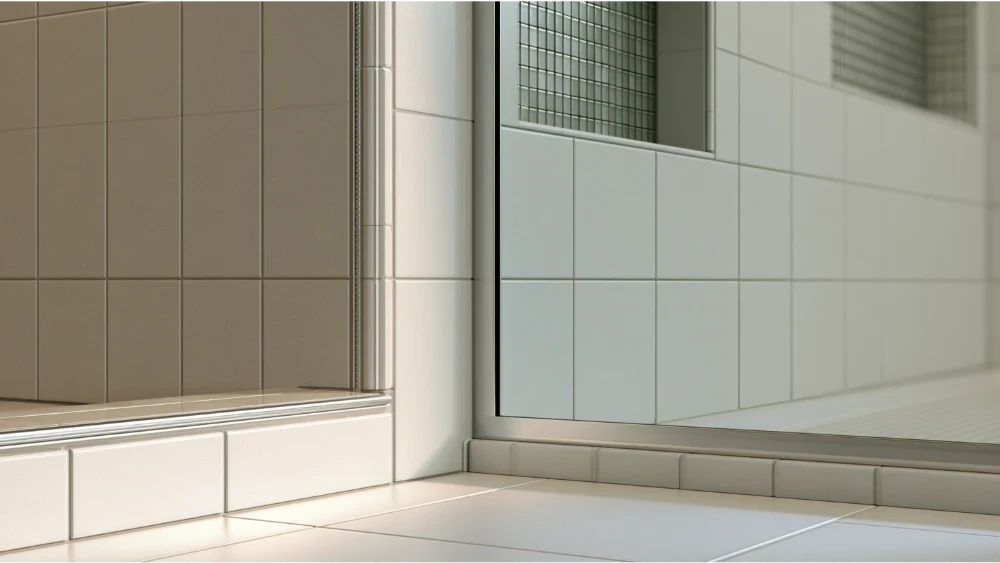
Exposed tile edges are usually finished one of four ways: a matching bullnose tile with a rounded edge, a decorative pencil or liner trim, a metal or PVC edge profile like a Schluter profile, or a carefully mitered edge. Bullnose gives a softer, traditional look. Schluter-style profiles create a clean, modern edge and protect the tile where matching bullnose isn’t available. If you’re planning a bathroom, kitchen, floor, or shower project and want the finished edge to feel intentional rather than like an afterthought, this is the detail to settle early.
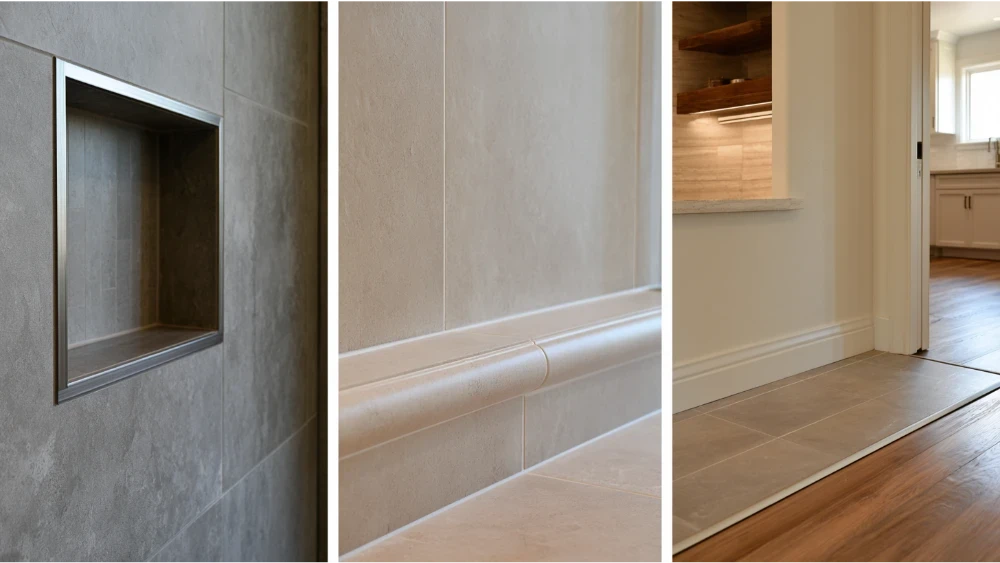
A raw cut tile edge can look unfinished, feel sharp to the touch, and chip over time in corners and transitions. The right trim adds architectural detail and quiet visual interest, whether the design leans modern or traditional. The key is planning it before tile is ordered and before layout begins, because the finish often depends on which pieces the tile line offers. Common spots our clients care about include:
| Edge option | Best look | Best use | Watch-out |
|---|---|---|---|
| Bullnose tile | Soft, classic | Traditional baths, subway tile, backsplash edges | Matching pieces may not exist and can cost more than field tile |
| Pencil/liner trim | Decorative, framed | Backsplashes, accent borders, wainscoting | Can feel cluttered in minimal designs |
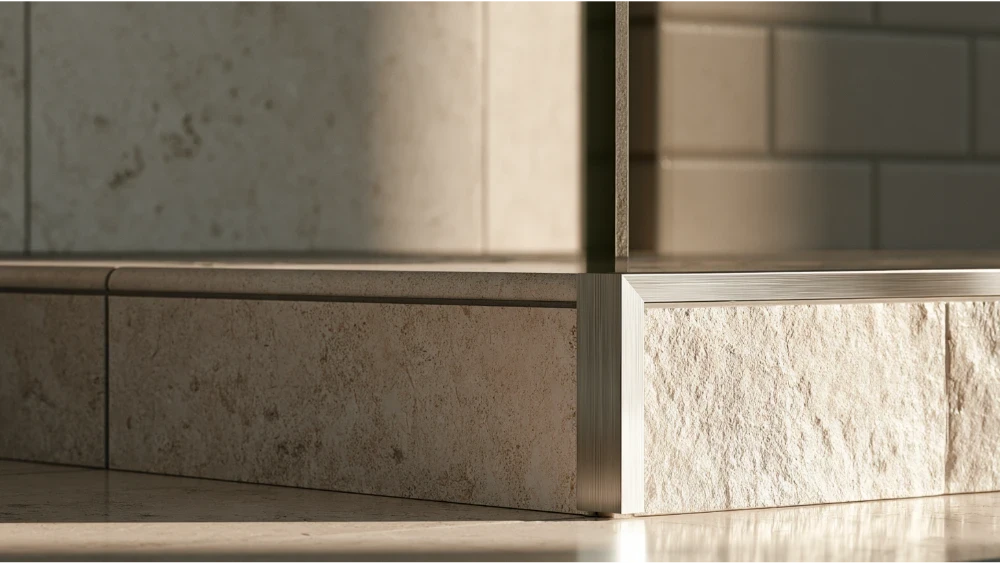
| Metal/Schluter profile | Clean, sleek, protective | Niches, outside corners, contemporary tile, no bullnose available | Must be sized and installed correctly |
| Mitered edge | Seamless, minimal | Select corners with skilled installation | Fragile or sharp if poorly cut |
| Floor transition profile | Functional, smooth | Tile-to-carpet, wood, or LVP transitions | Must account for height difference |
In short: bullnose reads soft and blended, pencil trim frames and adds dimension, Schluter and metal profiles look clean and protect the edge, and a mitered corner disappears when it’s cut well. Each suits a different tile and room. Solving that match is less a puzzle than a question of planning early, and the answer helps the whole room feel intentional.
Bullnose is a factory-made tile with one rounded, finished edge, usually made from the same material as the field tile for a cohesive look. It shines on subway backsplashes and traditional baths, where it blends into the field more naturally than metal ever could. The catch: many modern and large-format porcelain lines don’t offer a matching bullnose, and when they do, the trim often costs more than the field tile.
Pencil trim and ceramic liners add dimension when you want the edge to be seen rather than to disappear. They’re a nice way to frame a backsplash, cap a wainscot, or finish a shower edge with a little detail. In a minimal design, though, too much decorative trim can feel busy.
A Schluter profile is an extruded metal or PVC strip. Its hidden leg gets embedded in thin-set mortar under the tile, leaving a clean visible reveal along the edge. That reveal protects the tile from chipping and gives the crisp line modern porcelain often calls for. Common shapes include the rounded Rondec style, a square edge, and the straight Jolly style, each sold in 8-foot lengths and chosen for niches, outside corners, and backsplashes.
Because profiles work with almost any tile, they solve the problem when no matching bullnose exists. Sizing matters: the profile is selected by tile thickness so the surface sits flush, never higher than the tile and up to about 1/32 inch lower. It also has to go in before the adjacent tile, which is why the edge plan belongs in the layout conversation. A mitered edge is the other clean option here, seamless and refined, but it’s easy to chip if the cut isn’t precise. On curbs and benches especially, that’s work for skilled hands, not a DIY experiment.
Before installation, ask: Does this tile line include matching bullnose? Where is every exposed edge? Should it blend in or stand out? Will it sit in a wet or high-traffic area? Can I see a mockup of the tile, grout, and trim together? A mockup lets you judge shade, joint size, and the trim in context before anything is set. Because this is a lasting product, seeing it in person builds trust in the choice before you commit.
For Sacramento-area homeowners, have this conversation before material is ordered. We help you choose edge details that fit the tile, the room, and the feeling you’re after. Get a quote or reach us for a complimentary consultation at (916) 205-5112 or vaskotileco@gmail.com. Our website form runs a simple security check so we can confirm you are human before proceeding to your request.
It depends on the tile and the space. Bullnose, pencil trim, Schluter-style profiles, and mitered edges each suit different looks and durability needs for kitchens and bathrooms alike.
Bullnose suits traditional, seamless designs when matching pieces exist. Schluter profiles work with almost any tile and give a sleek, clean line ideal for contemporary or high-traffic edges.
A metal or PVC edge profile such as a Schluter profile, or a carefully mitered edge, finishes and protects the edge cleanly.
Typically the joint between the tile and a metal profile is filled during grouting. Your installer will confirm the right approach for your material and location.