
Mosaic tile makes its biggest impact in smaller, intentional areas: shower floors, niches, backsplashes, decorative borders, and accent walls. Used in the spots where the eye naturally lands, small-format detail adds texture, pattern, and a handcrafted focal point without overwhelming a room. The best results come from choosing tile rated for its exact location and relying on precise installation, waterproofing, and thoughtful grout planning.
That’s the short version. Mosaics bring color, artistry, and movement to a space in a way large tile can’t, and they do it best when the detail feels deliberate rather than busy. This guide is written for homeowners planning a bathroom, kitchen, or floor project who want that detail to look intentional and hold up for years. We’ll cover where mosaic tiles shine, how to choose the right material for each location, and the craftsmanship that separates a beautiful result from a disappointing one.
What Is Mosaic Tile, and Why Small Format Detail Makes the Biggest Impact
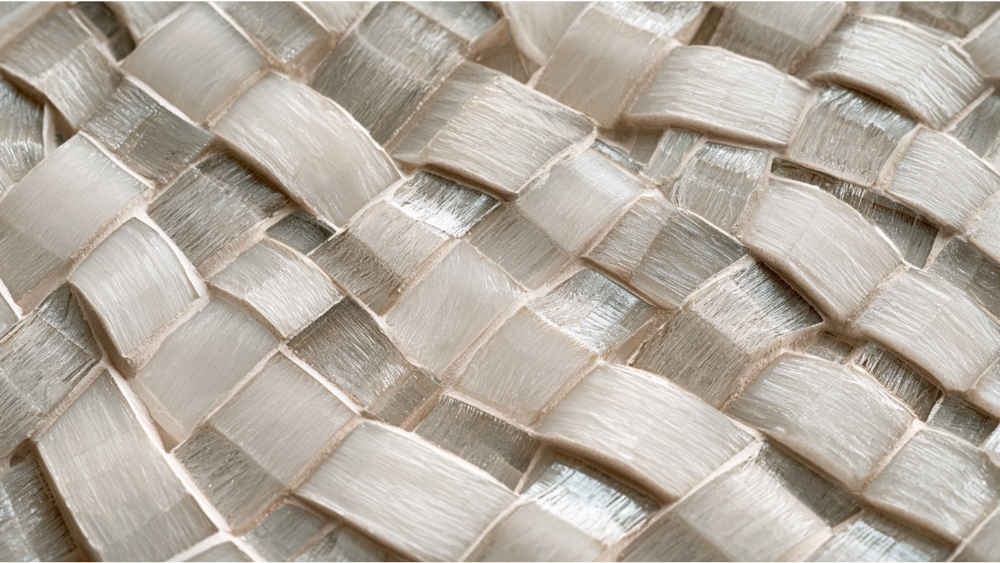
Mosaic tile is small-format tile, made up of many individual pieces, each typically smaller than nine square inches. Those pieces are set close together, which is what gives mosaics their signature look: frequent grout lines that add texture and a surface that shifts and catches the light as you move around the room. The small shapes are also what let mosaics wrap corners and curves that larger tiles simply cannot.
Mosaics are made from several materials, each with its own character. Glass mosaics have a shimmering, light-reflecting quality that brightens a space. Natural stone mosaics offer an organic, earthy feel with subtle variation from piece to piece, and no two stone tesserae carry quite the same veining. Ceramic is a versatile, approachable tile material with a wide range of colors and finishes, and porcelain is prized for being durable and impervious, with water absorption of 0.5% or less, which makes it a dependable option for wet and high-use areas.
Most mosaic tiles arrive as sheet-mounted tile, small pieces held together on a mesh backing so they can be installed efficiently in a repeating pattern. Custom, hand-laid designs are also possible for a more bespoke look, and micro mosaics let you work in fine details a larger format could never capture. Either way, the many small pieces are what make mosaics feel more handcrafted than a plain field of large-format tile. This is a detail-driven format, and it rewards being used with intention.
Where Mosaic Tiles Make a Big Impact and Add Visual Interest
Mosaics work best where they highlight something: an architectural feature, a focal point, or a spot that deserves a little more attention. The versatility of small-format tile is what lets it move from floors to walls to backsplashes without missing a beat, giving you close to endless design possibilities. Here are the places where mosaic tiles earn their keep.
Shower Floors and Shower Walls: Traction Underfoot, Beauty at Eye Level
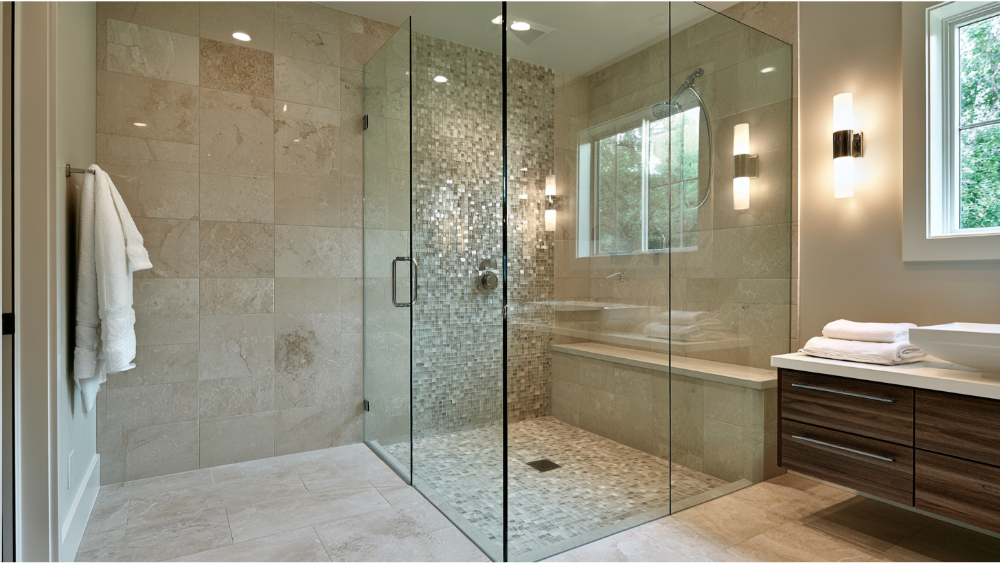
Small tiles follow the slope of a shower pan more naturally than large tile, and the extra grout lines add welcome traction underfoot. In the 2025 Houzz Bathroom Trends Study, 61% of homeowners tiling upgraded shower floors chose small tile, from 1×1 to 4×4 inches. Mosaics also work beautifully on shower walls, where a band or a full accent panel is a way of adding visual interest at eye level. Just be sure the tile is rated for wet floors or wet walls, whichever the location calls for.
Shower Niches and Benches: A Small Detail That Pays Off
A tiled niche or bench is a small surface with a high visual return. It’s a natural place to echo the shower floor tile, tying the space together and giving the eye a refined moment to land on. A contrasting mosaic inside a niche is one of the easiest ways to add a considered detail.
Master Bathroom Accent Walls: A Tranquil Focal Point
A single mosaic wall behind the vanity or tub creates a spa-like retreat without the visual noise of tiling everything. Accent walls read as a statement, calm and intentional, and let the rest of the bathroom stay quiet. This is where texture and a soft palette, often built on light colors and warm beige, can carry a real sense of serenity. Natural light from a nearby window only heightens the effect, catching the glass or stone and giving the wall subtle movement through the day.
Guest Bath and Powder Room Floors: Charm in a Compact Space
Smaller spaces can carry pattern beautifully. A patterned mosaic floor, or a framed “tile rug” effect, adds charm and personality to a powder room, especially when the walls stay understated. The mix of shapes and colors gives a compact space a distinct style all its own, and the design work here has real artistic flair.
Kitchen Backsplashes: Personality in a Hardworking Spot
Behind the range or sink, mosaics add durability and easy cleaning where splashes happen. In the 2026 Houzz Kitchen Trends Study, mosaic patterns made up just 6% of tile backsplashes, which means a mosaic backsplash stands out as a genuinely personalized detail. Backsplashes done in glass mosaics are a favorite here for the way they catch kitchen light and play off nearby cabinets.
Decorative Borders, Transitions, and Inlays: Framing With Intention
A slim mosaic border can frame a floor, mark a transition between rooms, or add a decorative inlay that draws the eye. It’s one of the most understated ways to create intricate patterns without committing a whole surface, and it lets you introduce a second material or color in a controlled way.
Small Spaces, Big Impact: How Mosaics Can Visually Expand a Room
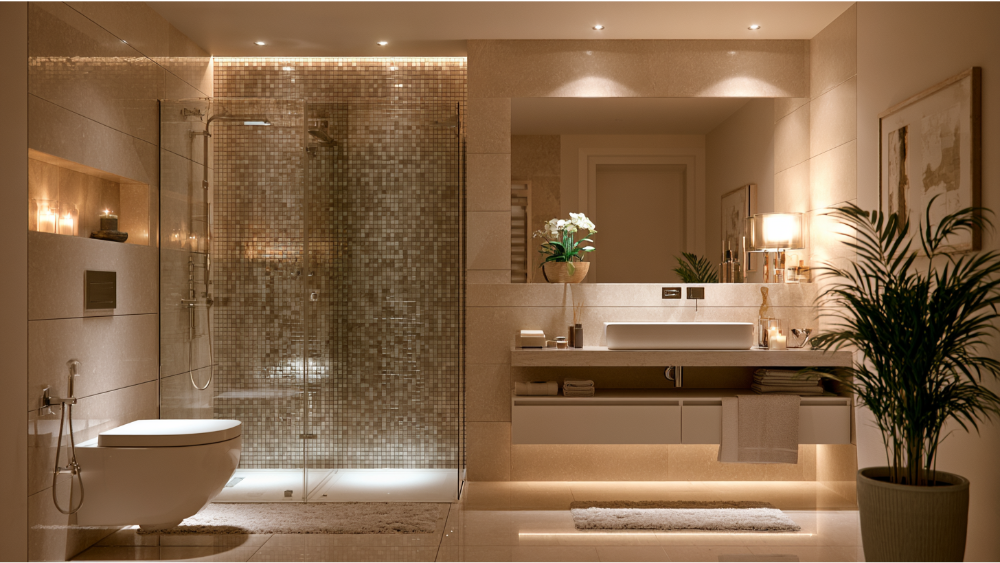
A common worry is that small tile makes a small room feel smaller. In practice, the opposite often happens. Reflective glass mosaics bounce light around a compact bathroom, and intricate patterns add depth that draws the eye and makes the space feel more open than a flat expanse of large tile would.
Classic and modern patterns both add layers of texture and personality, which gives a small room something to look at rather than emphasizing its size. That ability to add depth is part of what makes mosaics such a practical choice in tight footprints. Used thoughtfully, mosaics bring elegance to compact bathrooms and powder rooms, turning a small interior into an inviting one. The trick is restraint: let the pattern work in one area and keep the surrounding surfaces calm.
How Do You Choose the Perfect Choice of Mosaic Tile for Each Location?
Not every mosaic belongs everywhere. The right choice depends on where it’s going and how it’ll be used, from the materials down to the finish. Here’s a plain framework for thinking it through.
| Consideration | What to think about |
|---|---|
| Wall vs. floor | Wall-rated tile won’t hold up on a floor. Confirm the tile is floor-rated for any surface you walk on, and wall-rated for shower walls. |
| Dry vs. wet area | Wet areas need tile suited to moisture and the right waterproofing beneath it. |
| Barefoot wet area vs. backsplash | A shower floor has different traction needs than a kitchen backsplash that only gets splashed. |
| Material | Porcelain for durability and wet areas, ceramic for versatility, glass for light, natural stone for an organic look. |
| Finish and texture | Matte finishes tend to offer more grip; polished surfaces reflect more light. Textures also change how a pattern reads. |
| Pattern, shapes, and grout | Larger shapes and contrasting grout make a bolder statement; tighter patterns read as texture. |
Slip resistance is worth understanding, not fearing. ANSI A326.3 commonly cites a wet DCOF of 0.42 or greater for level interior wet floors, but “level” there means a slope of no more than 2%. Shower floors are sloped and used barefoot, so 0.42 alone isn’t a complete answer. The reliable move is to follow the manufacturer’s wet-area and floor rating for the exact spot you have in mind, and porcelain mosaic tiles can also be set on curved or uneven surfaces when a design calls for it. On high traffic areas like commercial floors and entryways, that rating matters even more.
The Design Rule: Let Mosaic Be the Detail, Not the Distraction
The most elegant mosaic work usually comes down to one decision: choose a single mosaic moment and let it lead. A shower floor, a niche, a feature wall, a backsplash. Pick the one spot where the detail belongs and keep the rest of the room quieter. Handled this way, the mosaic becomes an excellent choice for anchoring a room’s interior design rather than fighting it.
Pair a busy mosaic with simple field tile so the pattern has room to breathe. Repeat a color, shape, or material elsewhere in the space so the pieces blend seamlessly and tie together without repeating the full pattern. Contrast can be beautiful, but it works best in small, deliberate doses. In a small bathroom especially, competing patterns and textures on every plane quickly turn from artful to overwhelming.
When you do want a defining feature, mosaics can go further: micro mosaics and custom murals turn a fireplace surround or a single wall into the centerpiece of a room and highlight the architectural features already in the space. This is where fine details create real drama. The goal is a focal point that feels considered, where the artistry earns its place and everything around it supports it.
Grout, Cleaning, and Waterproofing: The Practical Side of Mosaics
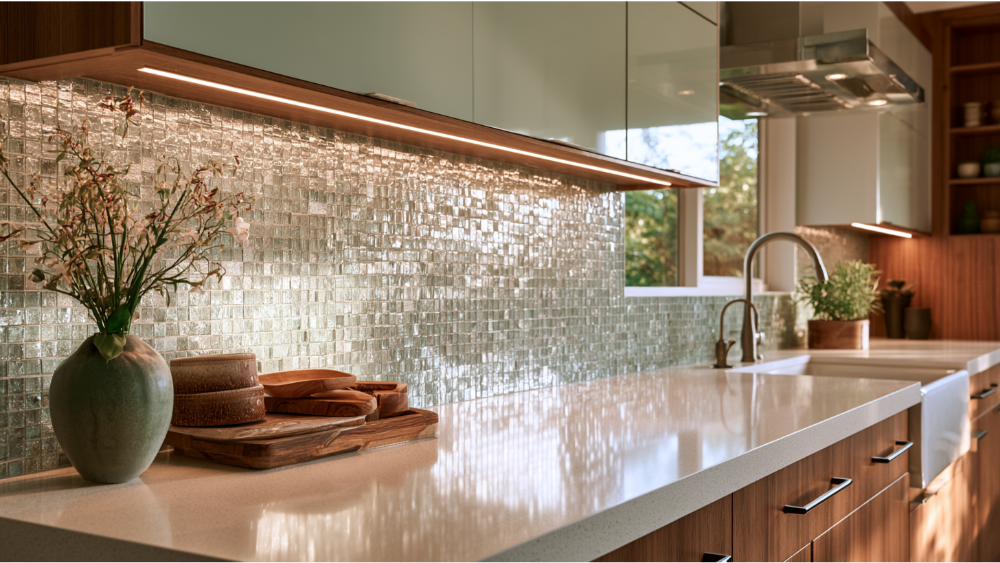
More grout lines mean more character, and also more grout to care for. It’s an honest tradeoff worth understanding before you commit.
Cementitious grout is porous and can absorb stains, which is why many homeowners choose to seal it. Epoxy grout is nearly as stain-resistant as the tile itself, so it’s often a smart pick for mosaics in busy or wet areas. For everyday cleaning, neutral-pH cleaners are the safe choice. Avoid vinegar and other acidic cleaners on cement-based grout, since acids can break it down over time, and be especially careful with natural stone, which can etch.
One point matters more than any other, and it’s the one many guides skip: tile and grout are not waterproof. The TCNA is clear that grout joints don’t waterproof a wet area. A shower stays dry inside its walls because of the waterproofing system and substrate installed behind and beneath the tile, not because of the tile itself. The mosaic you see is the finish. The protection lives in the work you don’t see, and that hidden layer is where lasting quality is decided.
Why Installation Precision Matters More With Mosaics
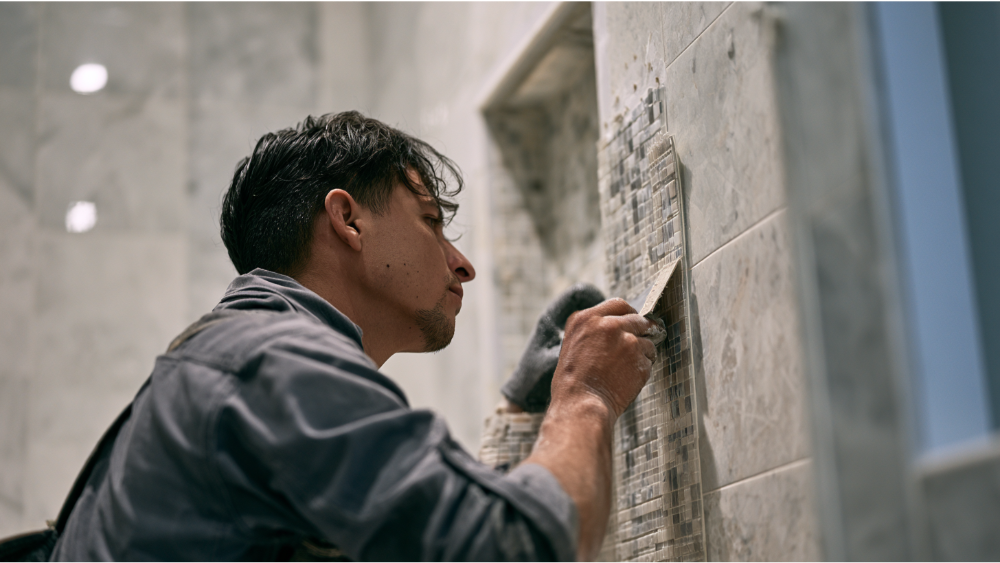
Mosaics show every choice. With large field tile, small imperfections tend to disappear. With hundreds of tiny pieces, sheet alignment, spacing, and grout consistency are all on display, and a rushed job announces itself the moment you look closely.
Good mosaic work starts before a single tile is set. Sheets have to be aligned so the seams between them vanish and the spacing stays even across the whole surface. Cuts around drains, niches, corners, and edges need to be clean, and transitions between planes and walls need to flow. Curved or uneven surfaces raise the difficulty further, since each piece has to sit right for the pattern to read the way it should. Then the grout has to be worked consistently so the finished surface looks like one intentional piece.
Since starting my tile career in 2003, I’ve given each project the personalized attention it deserves, and mosaics are where that attention shows most. Our team plans the layout first, sets each tile expertly, and checks in with you as the work moves along so the result matches what you pictured. With 15+ years of experience across residential and commercial projects, we treat this stage as the one that decides whether a mosaic looks handcrafted or merely installed.
A Note for Sacramento-Area Homeowners
If your mosaic tile is part of a shower replacement, a full bathroom remodel, or any work that touches plumbing, electrical, or your layout, check permit requirements with the City of Sacramento or your local building department before work begins. It’s a quick step that keeps a bigger project on solid footing.
California homeowners should also expect a written contract and written change orders for covered home improvement work. The CSLB limits down payments to $1,000 or 10% of the contract price, whichever is less, which is a helpful benchmark when you’re comparing bids. We serve Sacramento, Roseville, Folsom, Elk Grove, Citrus Heights, Carmichael, and the wider Greater Sacramento Area.
Frequently Asked Questions
Is mosaic tile outdated?
No. Classic and modern patterns, textures, and handmade looks keep mosaics current across various materials. NKBA’s 2026 Bath Trends Report found 66% of surveyed professionals see patterned and textured tiles gaining prominence, so mosaic tiles remain a popular choice for adding personality.
Do small tiles make a space look bigger?
They can. Reflective and intricately patterned small tile adds depth and bounces light around a room, which helps compact bathrooms and powder rooms feel more open and elegant than a plain expanse of large tile. Over large expanses, though, a bolder pattern reads best in one defined zone.
What is a small tile in a mosaic called?
Each individual piece in a mosaic is called a tessera. Many tesserae set close together, with their frequent grout lines, are what create the texture and handcrafted look mosaics are known for.
Is mosaic tile good for shower floors?
Yes, when it’s floor-rated and wet-rated. Small pieces follow the shower’s slope and the extra grout lines add traction. Confirm the manufacturer’s wet-area rating for that exact spot, and rely on proper waterproofing installed beneath the tile.
Get a Quote From Vasko Tile
If you’ve been burned by a contractor before, we understand the hesitation, and we work to earn your confidence from the first conversation. Our promise is straightforward: clear communication, respect for your budget and your vision, and craftsmanship that’s built to last. Whether you’re planning mosaic tile for a shower, a master or guest bath, a kitchen backsplash, a floor, or a commercial space, we’d be glad to help you explore ideas, gather inspiration, and create something beautiful.
Contact us for a complimentary consultation by phone at (916) 205-5112 or by email at vaskotileco@gmail.com, and get a quote on your unique project. Serving the Greater Sacramento Area.
