Key Takeaway
For shower wall tile that lasts, porcelain is the top material choice, absorbing 0.5% water or less by ANSI standards, making it essentially impervious to daily moisture. Glazed ceramic tile performs well on vertical walls when rated for wet areas, and glass or natural stone work best as accents. A lasting shower also depends on proper waterproofing behind the tile and skilled installation throughout the entire assembly.
For shower walls that hold up for years, porcelain or glazed ceramic tile are the safest choices for the main field, with glass and natural stone used thoughtfully as accents. The most enduring patterns are clean, well-planned layouts, and they only last when they’re installed over proper waterproofing. If you’re a homeowner planning a bathroom remodel and you want a space that looks beautiful and keeps looking that way, that’s the short version. A lasting shower doesn’t come from picking a pretty tile alone. It comes from pairing a durable material, a timeless pattern, and skilled tile installation of every tile on the wall. We’ll walk through each part so you feel confident before the first tile goes up.
There are two different things people mean by “waterproof,” and confusing them is where showers go wrong. Water resistance is about the tile surface: how little water the tiles absorb and how easily they wipe clean. Waterproofing is about the wall behind them. Tiles and grout are the finish, not the barrier. Grout in particular will let moisture pass, which is why a continuous waterproof membrane behind the tiles is what actually keeps water out of your shower walls.
Once you understand that, choosing well gets simpler. A shower wall that lasts rests on three pillars: a low-absorption material like porcelain (impervious at less than 0.5% water absorption), a smart layout that suits the tile size, and expert installation of the whole assembly, from the shower floor up to the top of the walls. Get all three right and you get beauty that holds up. Miss one and even the best tile can disappoint you.
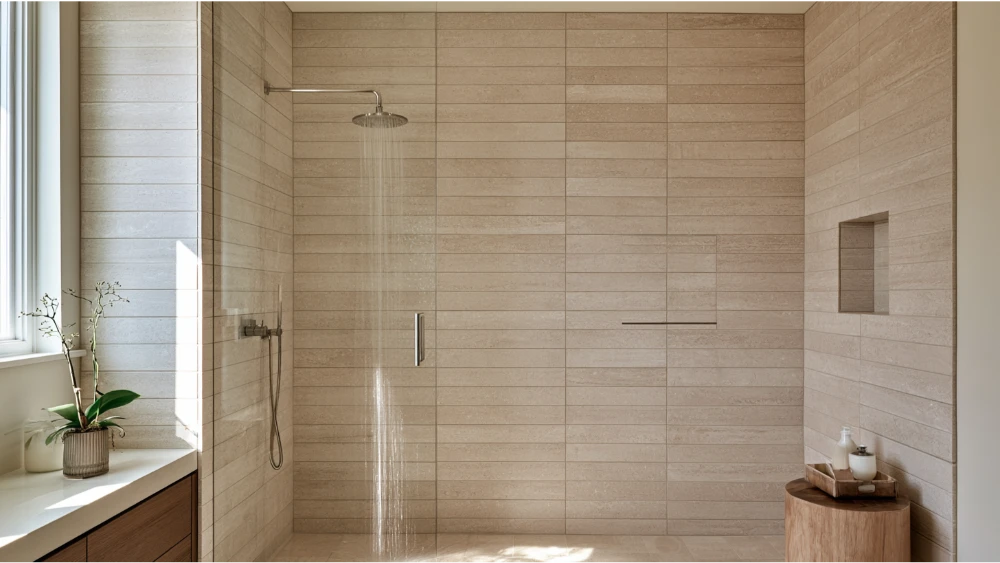
Some materials shrug off daily water and cleaning with almost no fuss. Others reward you with beauty but ask for more attention. Here’s how the common tiles generally stack up for shower walls, from lowest maintenance to highest:
Porcelain is the workhorse of a lasting shower wall. Industry standards (based on ANSI A137.1 and ASTM C373 testing) define porcelain as a tile that absorbs 0.5% water or less, which makes it essentially impervious. In plain terms, water has nowhere to go. That water resistance is exactly what you want in a bathroom that gets wet every day, and it’s a big reason porcelain tiles have become the leading choice in bathroom tile. Porcelain is also the most versatile visually, carrying large format tiles looks and convincing stone or wood look designs beautifully. A wood look plank in porcelain gives you the warmth of wood grain and texture with none of the swelling real wood would suffer in a shower. You get enduring strength and the finish you pictured, without babying it.
Glazed ceramic tile is a strong choice for shower walls when it’s rated for wet areas. The glazed surface handles moisture well on vertical walls, and ceramic offers an enormous range of colors, shapes, and handmade-look finishes that porcelain doesn’t always match. If you love a specific glaze or a slightly irregular artisan look, ceramic tile is often where you’ll find it. Classic subway tile lives here too, and a crisp white ceramic tile in that shape is a natural entry point into the layout choices we’ll cover shortly.
Glass tile is completely non-porous and wipes clean easily, which sounds ideal until you remember it isn’t porcelain and its glassy surface shows every flaw in the setting bed. That’s why we like glass most as a luminous accent: a shower niche, a featured tile band, or a single wall that catches the light. Glass mosaics work especially well in these smaller doses, and their many colors add real visual interest. Installation precision matters more with glass than almost anything else, so it rewards a careful hand. Used with restraint, it adds a touch of elegance that stays fresh for years.
Marble, granite, and slate are natural materials that bring a sophistication which is hard to imitate. They also ask more of you. Stone like granite and slate needs periodic sealing, and the Natural Stone Institute is honest about what that does: sealers are repellents, not force fields. They make stone more stain-resistant, not stain-proof. Acids such as lemon or vinegar can dull calcareous stones like marble, so cleaning means neutral cleaners or mild soap. If you accept that upkeep, natural stone can be a beautiful centerpiece on a shower wall. If you want to forget about maintenance, it isn’t the right fit.
This is the practical bridge for many homeowners. Marble-look and stone-look porcelain tiles give you the veining, texture, and warmth of natural stone with porcelain’s durability and near-zero maintenance, which strikes a perfect balance between looks and upkeep. No sealing schedule, no worrying about a splash of the wrong cleaner. For a luxe retreat that has to survive real daily life, it’s often the smartest default for shower walls.
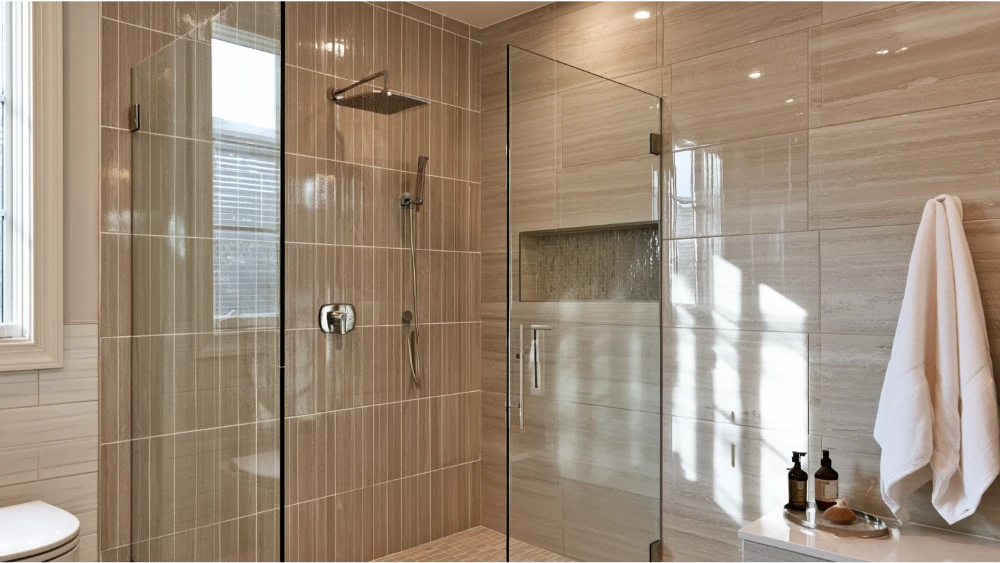
The patterns that age gracefully favor simplicity and clean lines. Bold statement layouts tend to date fastest, which is worth remembering when you’re choosing a style you’ll live with for a decade or more. The 2025 U.S. Houzz Bathroom Trends Study gives us a good read on what renovating homeowners are actually choosing. Between material, layout, and detailing, tile offers nearly endless design possibilities. Here are the layouts we return to most.
The enduring favorite. Houzz found horizontal brick is chosen by 31% of renovating homeowners, making it the single most popular shower wall pattern. The classic running bond offset gives the wall a sense of order and broad appeal that works across nearly every style, from traditional to modern farmhouse. White subway tile is the obvious example, and it flexes beautifully depending on the grout color and fixtures you pair with it. The grout lines you choose can make the same subway tile read crisp and modern or soft and classic. There’s an offset detail worth knowing for longer tiles, which we cover a bit further down.
Stacking rectangular tiles vertically creates a clean, architectural look and draws the eye upward, which makes a shower feel taller. Houzz puts vertical stack at 20% of renovating homeowners. It suits contemporary bathrooms especially well, where the straight, uninterrupted lines reinforce a calm, modern feel. Porcelain tiles in a longer format lend themselves naturally to this style.
Horizontal stack lays tiles in even, aligned rows for a calm, orderly result. It’s the fastest-growing choice in the Houzz data, up 5 percentage points from the prior year to 18%. It reads as fresh without being trendy, which is exactly the balance you want in a bathroom built to last.
Large format tiles mean fewer grout lines, which delivers a clean, uninterrupted look and cuts down on the surfaces you have to keep clean. The tradeoff is that big tiles demand a flat, well-prepared wall, because any waviness in the substrate shows up as uneven edges. There’s also a layout rule worth respecting: for long rectangular tiles where the offset side is greater than 15 inches (think 12×24), industry guidance recommends keeping the offset to a maximum of 33% rather than a traditional half-brick, unless the manufacturer says otherwise. That smaller offset helps avoid lippage, where one tile edge sits proud of the next. This is one of those details that separates a shower wall that looks flawless from one that doesn’t.
Mosaics and angled patterns like herringbone and chevron add texture and a contemporary touch, but they come with more grout lines and more cutting. That makes them best as mosaic accents rather than full low maintenance walls: a niche, a featured tile band, or a focal panel behind the fixtures. A mosaic tile strip is also a classic way to define a shower floor, since the many small grout lines add grip underfoot. Houzz shows mosaic and herringbone each at just 3%, and used with restraint that’s exactly right. A little goes a long way and keeps the look timeless.
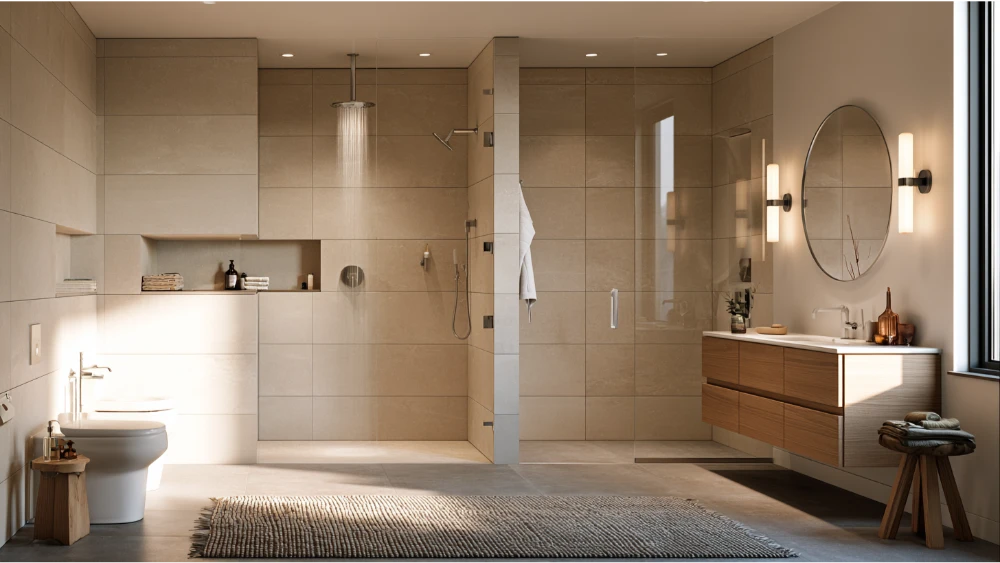
Tile size is really a maintenance decision in disguise. Larger tiles mean fewer grout lines and less cleaning, though they need precise prep. Smaller tiles and mosaics bring artisan texture but more grout to maintain. This is one reason floor tile choices for a shower floor often lean toward smaller mosaic sheets, while the walls can carry a larger format. Grout choice matters just as much as the tile. Mid-tone grout hides everyday use better than stark white, and epoxy grout resists staining and moisture far better than standard cementitious grout, which is a smart choice in any shower.
Day to day, a lasting shower is mostly about managing moisture. Wiping the tiles down with a soft cloth or squeegee after showering, running your ventilation fan, and cleaning with a pH-neutral mild cleaner (stone-specific cleaners for stone) keep the surface looking new. Warm water on a soft cloth clears soap scum and water spots before they set, and it prevents the kind of stains that dull a beautiful wall. That moisture resistance and good airflow make all the difference for a spa like retreat you can actually keep clean. The EPA recommends keeping indoor humidity between 30% and 60% and drying wet materials within 24 to 48 hours to discourage mold, and controlling mold really comes down to controlling moisture. It’s no surprise 58% of Houzz renovators add a ventilation fan. Good airflow protects both the tile and the wall behind it.
The most beautiful tile can only perform as well as what’s behind it. A water resistant shower environment starts with a continuous waterproofing membrane and proper tile backing, so moisture never reaches the framing. Then there are movement joints, sometimes called soft joints, placed where the wall changes plane, like inside corners and where the wall meets the shower floor. A flexible PVC or silicone joint absorbs that movement. The TCNA Handbook (detail EJ171) recommends these because buildings move slightly with temperature and settling, and a soft joint absorbs that movement instead of letting it crack your tiles or grout.
None of this shows in the finished shower, which is exactly the point. It’s the quiet, careful work that makes the visible beauty hold up. This is where craftsmanship earns its keep. With more than 15 years of hands-on experience across countless shower installations, our team treats the assembly behind the tiles with the same care as the surface you see, because that’s what a shower that lasts actually requires. Careful work on the ceiling and every plane matters as much as the field itself.
If you’re remodeling in the Greater Sacramento Area, a couple of local points are worth knowing. California code requires shower walls to have a smooth, nonabsorbent surface to at least 72 inches above the drain inlet, so your material and installation both need to meet that standard. Porcelain and glazed ceramic tile easily satisfy it. The 2025 California Building Standards Code (Title 24) takes effect January 1, 2026, so it’s the framework current projects are built to. If your remodel changes plumbing, electrical, walls, or the shower assembly, check permit requirements with the City of Sacramento or your local building department before work begins. Tile work in California commonly falls under the CSLB C-54 Ceramic and Mosaic Tile classification, so it’s reasonable to ask any installer about their license and how they handle waterproofing.
Choosing the right tiles and pattern is the fun part. It’s a beautiful way to create the space you’ve been picturing, and making sure they’re installed to last is where we come in. If you’d like guidance tailored to your project, whether you’re weighing porcelain tiles, subway tile, or a mosaic accent, get a quote or reach out for a complimentary consultation. Call us at (916) 205-5112 or email vaskotileco@gmail.com, and we’ll help you plan a shower you’ll enjoy every morning for years to come.