Key Takeaway
Fireplace tile surrounds require noncombustible, heat-resistant materials: porcelain, ceramic, approved natural stone, and manufacturer-approved glass are all safe choices for the decorative face around the opening. Porcelain tiles with 0.5% or less water absorption are the top pick for modern surrounds, offering large-format options and minimal maintenance. The firebox interior is a separate zone requiring firebrick and refractory mortar, not decorative tile.
For a fireplace surround, choose noncombustible, heat resistant tile: ceramic tiles, porcelain tiles, approved natural stone, and glass only when the manufacturer specifically approves it for fireplace use. These materials handle radiant heat without cracking or discoloring, and they give you room to design something that looks current instead of dated. One important distinction to hold onto: the surround is the decorative face around the opening, and the firebox is a separate zone that requires code-appropriate firebrick and refractory materials, not standard decorative fireplace tile. This guide is for homeowners planning a fireplace refresh who want a look that’s beautiful, modern, and built to last. We’ll walk through the materials, the code basics, and the fireplace tile ideas that hold up over time.
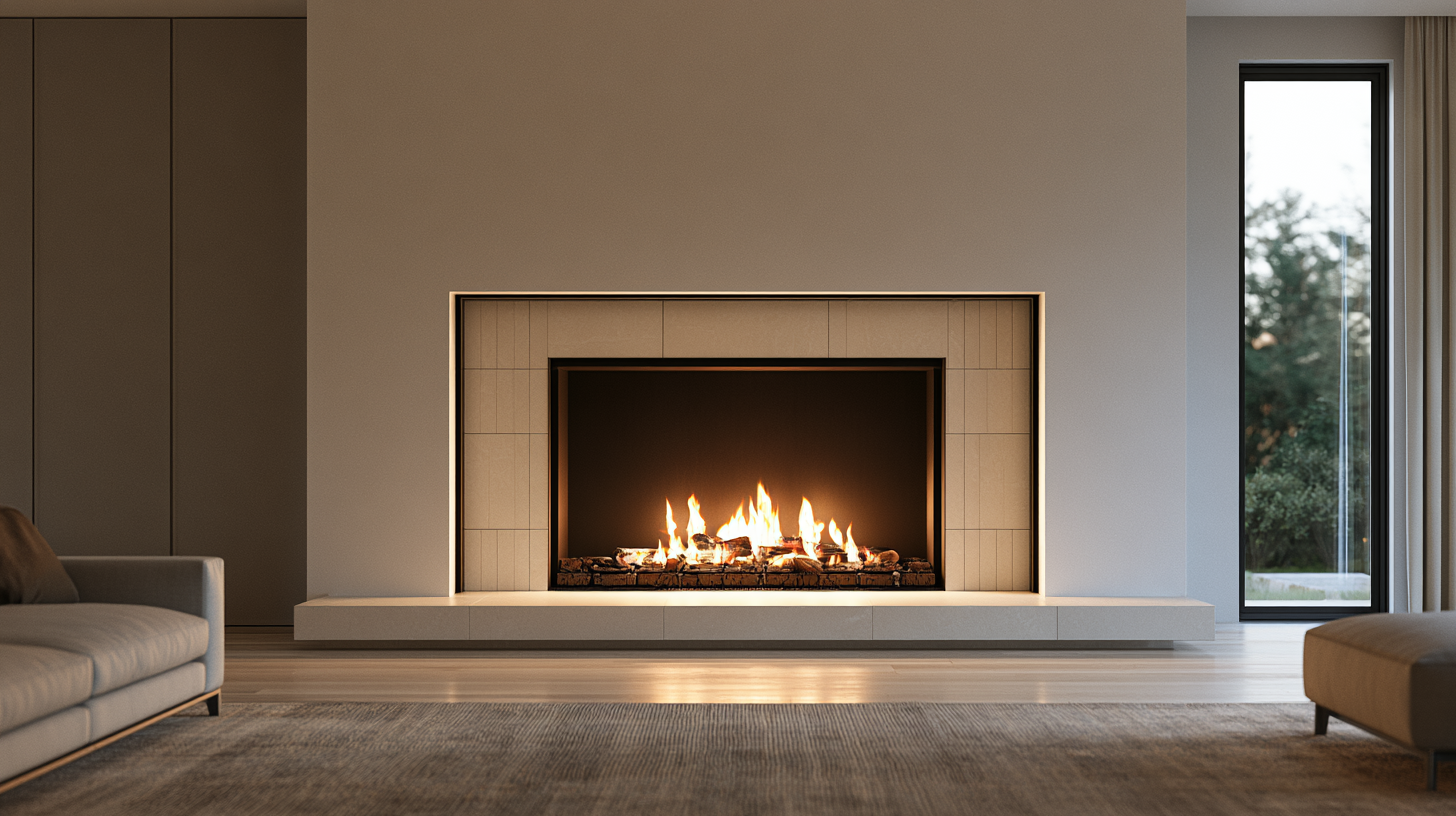
Before you fall in love with a tile, it helps to know which part of the fireplace you’re actually finishing. Each zone sees different heat and carries different code requirements, and the material that suits one may be wrong for another.
| Zone | What it is | Heat exposure |
|---|---|---|
| Surround | The decorative vertical face around the opening | Radiant heat, moderate |
| Hearth / extension | The floor area at and in front of the opening | Direct heat and embers |
| Firebox | The interior chamber where fire burns | Extreme, direct flame |
This is the wall area you see and the part most fireplace tile projects focus on. It takes radiant heat, so the tile needs to be noncombustible, but it isn’t in contact with flame. This is where you tile around a fireplace to create the finished, decorative look. The decorative face is the part of the fireplace called the surround in most design conversations.
The hearth sits at the base and extends into the room to catch heat and embers. It has its own minimum dimensions and thickness rules under the building code.
The firebox is where combustion happens, and it demands firebrick built to standards like ASTM C27 or C1261, set in refractory mortar. Tile that is appropriate for the surround is not automatically appropriate inside the firebox. Decorative tile does not belong there. Only special tiles designed for high temperature applications and very high temperatures belong in areas exposed to direct flame.
The right material gives you both the durability the heat zone needs and the look the room deserves. Here’s how the common choices compare, followed by a closer look at each.
| Material | Look | Heat resistance & maintenance | Best for |
|---|---|---|---|
| Porcelain tiles | Sleek, large format, stone- or concrete-look | Very heat resistant, low maintenance | Modern seamless surrounds |
| Ceramic tiles | Classic, versatile, wide color range | Non-flammable, durable tile | Timeless designs on a budget-conscious project |
| Natural stone | Weighty, elegant, one of a kind | Heat resistance varies by stone; needs sealing | Quiet, high-end focal points |
| Glass | Luminous, reflective, contemporary | Needs manufacturer approval for high heat | Accent bands and modern surrounds |
| Cement tiles / handmade-look | Patterned, textured, characterful | Confirm heat suitability and sealing | Vintage-modern statements |
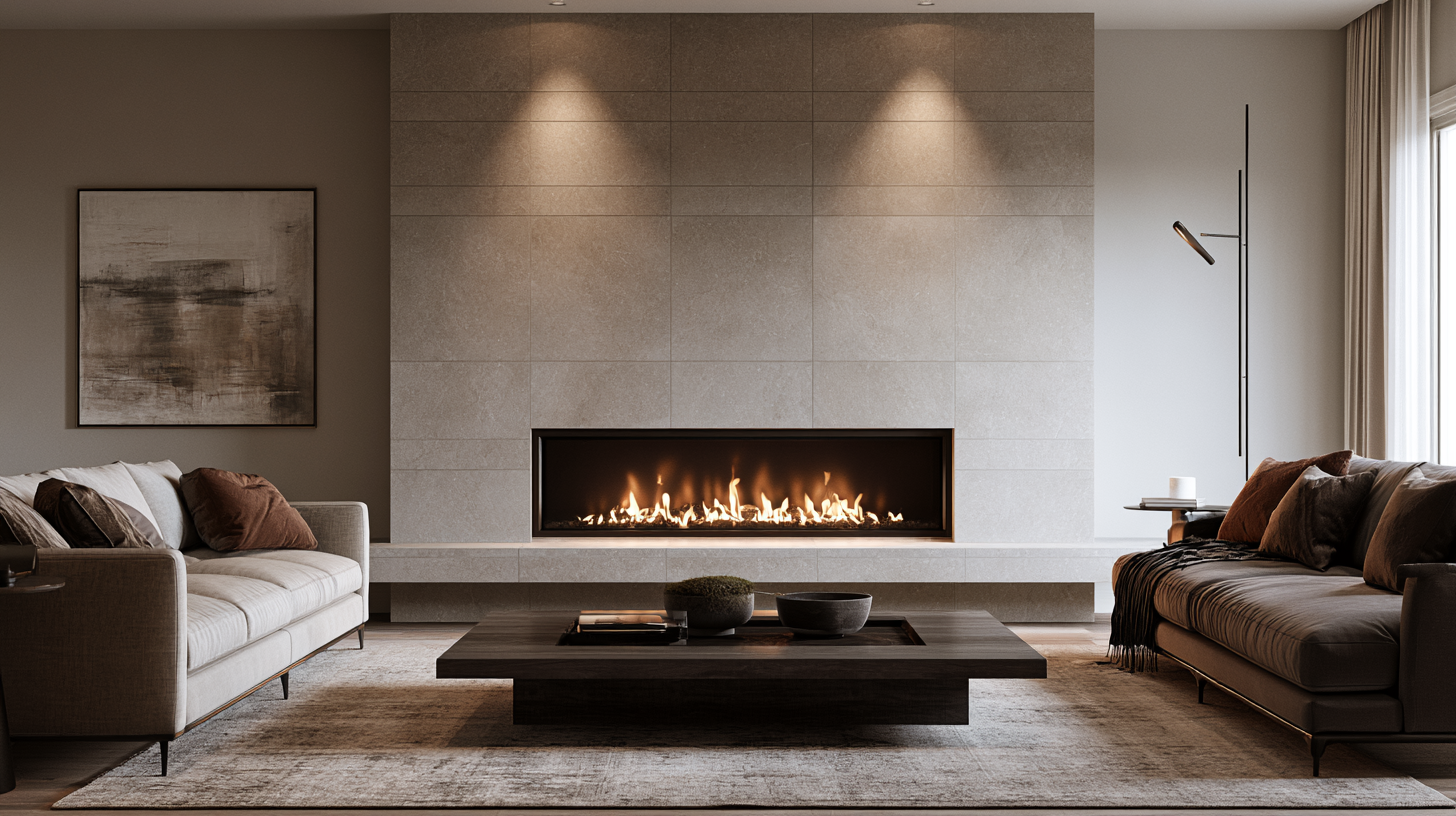
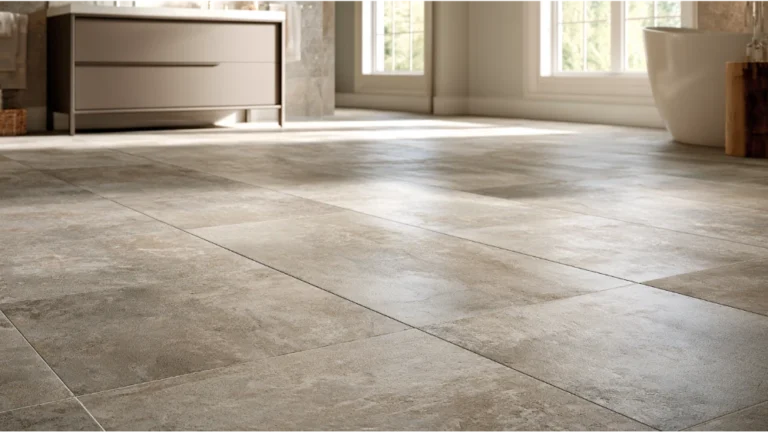
Porcelain is our go-to for sleek, modern surrounds. Porcelain tiles are defined by standards as an impervious tile with 0.5% or less water absorption, which makes them dense and easy to live with. They tolerate the high temperatures a working fireplace radiates, and they come in large format panels that minimize grout lines for a clean, seamless expanse. Stone-look, concrete-look, and matte finishes let you get the aesthetic of pricier materials with less upkeep. Many are made with through body color, so a chip is far less noticeable over years of use. Day to day, porcelain asks for little more than dusting and a wipe with a pH neutral cleaner. One practical note: large format tiles need a flat, well-prepared substrate to sit correctly, so the wall behind them matters as much as the tile itself. When a homeowner wants a modern space that reads minimal and refined, porcelain usually earns the recommendation.
Ceramic tile is a dependable baseline for a surround. According to TCNA, ceramic tiles are non-flammable and produce zero smoke development in a fire, and they’re known for a long service life. That combination of safety and durability makes ceramic tiles a comfortable choice, and their range of shapes, sizes, and glazes gives you real design freedom. Ceramic works beautifully as the perfect tile for a surround when it’s installed over a suitable substrate and kept out of the firebox. It’s the material we reach for when a homeowner wants something with timeless appeal and adaptability without overthinking it.
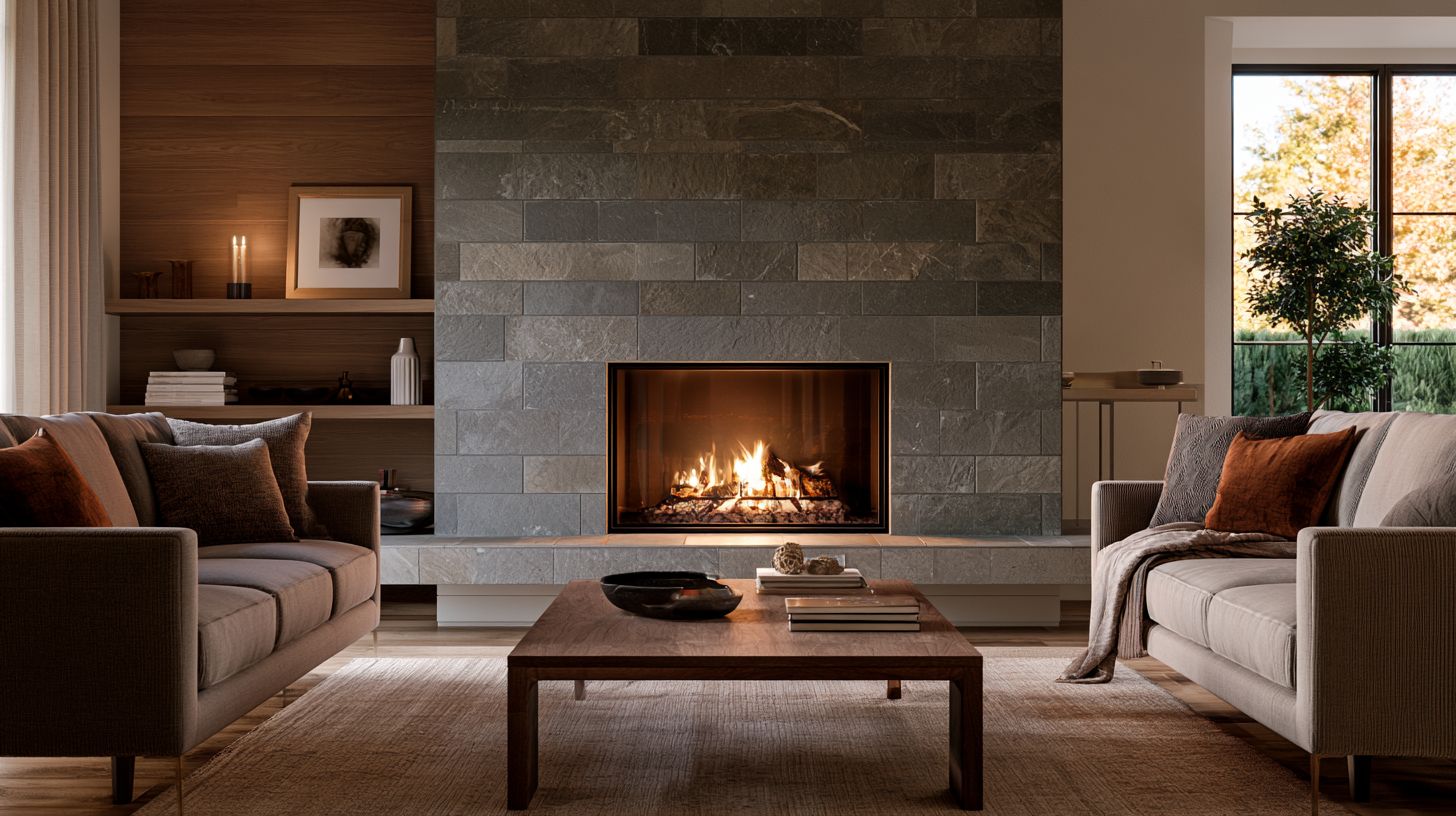
Natural stone brings a sense of permanence that manufactured tile can’t quite copy. Granite and slate stone tiles are highly heat resistant and hold up well near a fireplace. Marble is stunning, but marble is more porous and prone to etching and staining than porcelain or granite, so it needs a more careful hand. Whatever the natural stone, it should be sealed periodically, often annually, and cleaned with pH-neutral products to protect the finish. On the design side, honed and matte finishes give marble and other stone tiles a contemporary style, and slate adds an organic texture while keeping a modern look. These natural materials read as premium materials without a bit of pretense. Because porosity, sealing needs, and heat resistance vary so much from one stone to the next, the installer should confirm that the specific stone, finish, sealer, and placement all suit high heat exposure before the first tile goes up. That judgment is where experience pays off.
Glass tile adds luminosity and a reflective surface that can make a surround feel bright and current. It can work around a fireplace, but only when the tile and the setting materials are approved for that specific application. Glass has to handle rapid temperature changes from high temperatures, and ANSI A137.2 covers those specifications using real-life temperature ranges, so confirm the required setting materials, methods, and cure times with both the tile and the adhesive manufacturers. Cement tiles and encaustic styles bring vibrant colors and pattern, and they’re a favorite for adding personality with unique patterns. They also carry organic textures that reward good lighting. The same rule applies: confirm heat suitability and sealing before committing. Bold looks are worth it when the approvals check out and the tile is installed correctly.
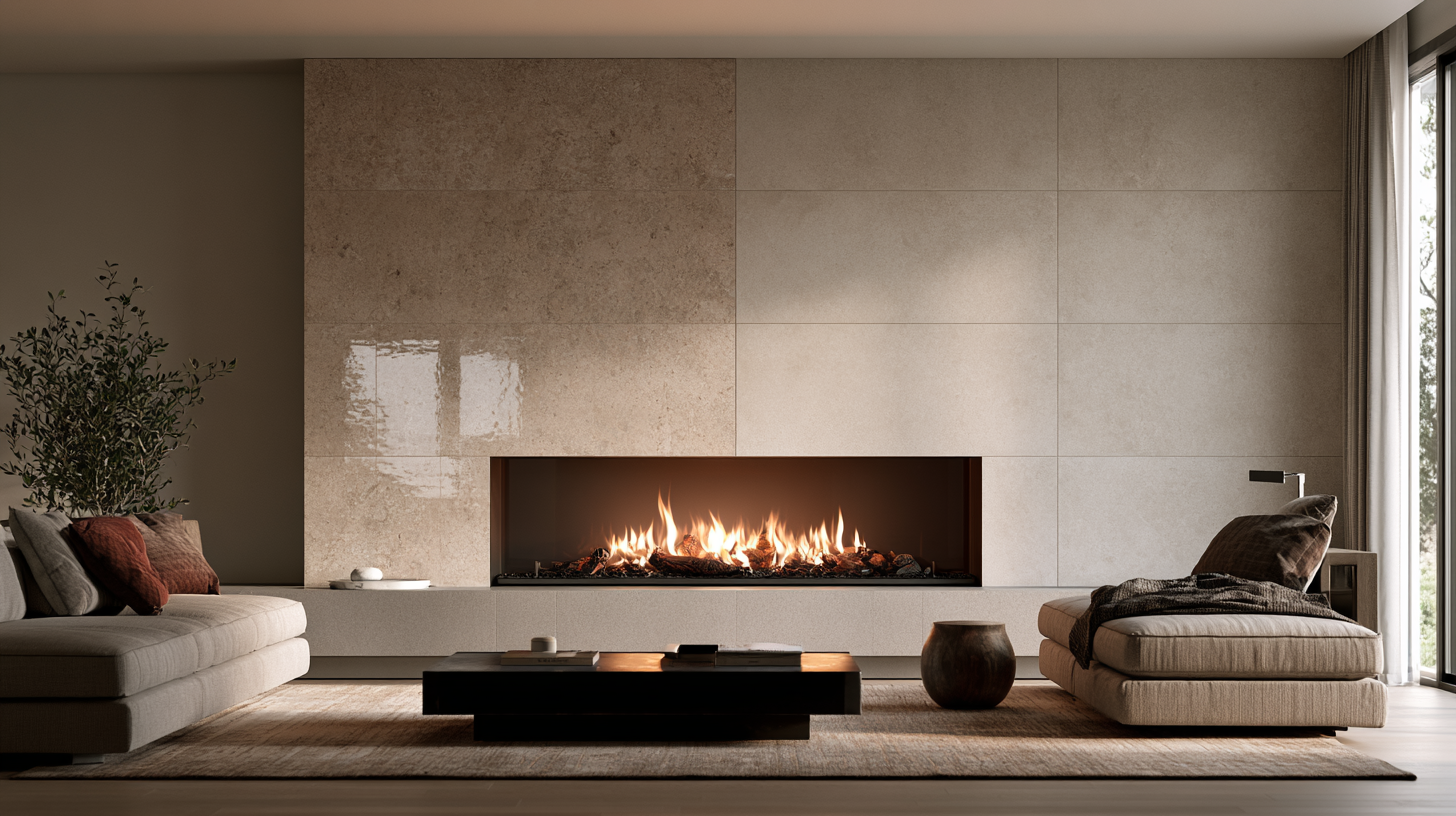
Finish is a design and a practical decision. Glossy tiles bounce light and make a small surround feel bright, though they show dust and fingerprints more readily. Matte tiles offer a calmer, more contemporary read and hide everyday marks, which is why matte tiles suit contemporary spaces so well. Either finish can work as long as the tile material itself is rated for high heat and approved for fireplace use.
Skipping the wrong material is as important as picking the right one. For safety and longevity, steer clear of these near a working fireplace:
The right heat resistant material prevents cracking, warping, and discoloration down the road. Choosing it up front saves a redo later.
You don’t need to memorize the building code, but a few numbers help you plan a surround that passes inspection and stays safe. Clearance to combustibles is the thread that runs through all of it.
For masonry fireplaces, the IRC requires the hearth extension to reach at least 16 inches in front of the opening and 8 inches beyond each side. Where the opening is 6 square feet or larger, that grows to 20 inches in front and 12 inches to each side. California Residential Code language sets a 4-inch minimum hearth thickness and a 2-inch minimum extension thickness, with a limited 3/8-inch noncombustible-material exception when the firebox opening is raised at least 8 inches above the extension.
Combustible mantels and trim must stay at least 6 inches from the fireplace opening. Within 12 inches of the opening, any combustible projection is limited to 1/8 inch for each inch of distance from the opening. Here’s the part people miss: noncombustible tile does not override those wood mantel and trim clearance rules. Your fireplace tile can be perfectly heat safe and your mantel can still be too close.
Factory-built, gas, and electric fireplaces are treated differently from masonry units, and wood burning fireplaces carry their own conditions. They must be listed, labeled, and installed according to the conditions of the listing and the manufacturer’s instructions. Your fireplace manual matters as much as the tile label, and it should be read before any material decision is final.
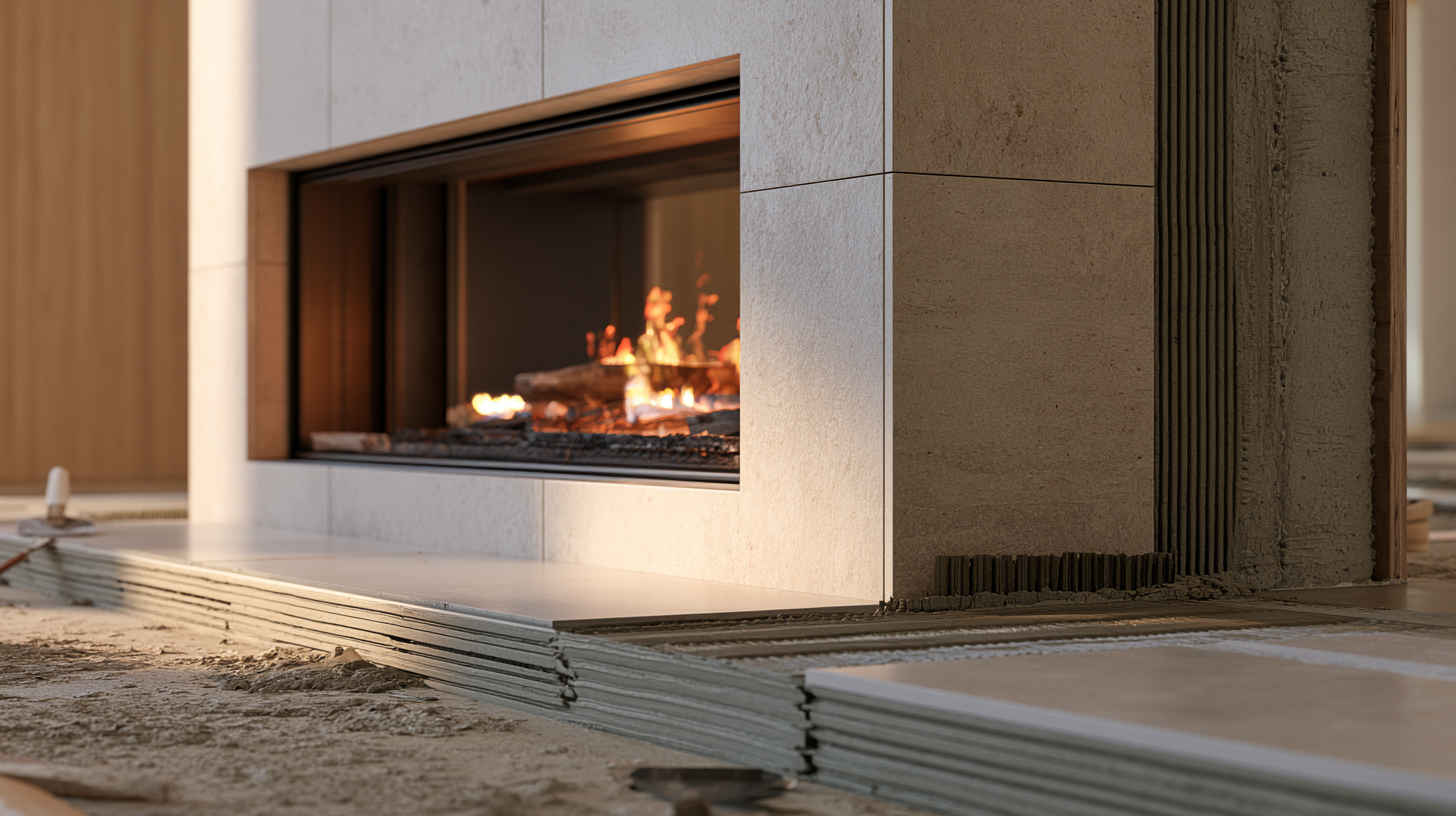
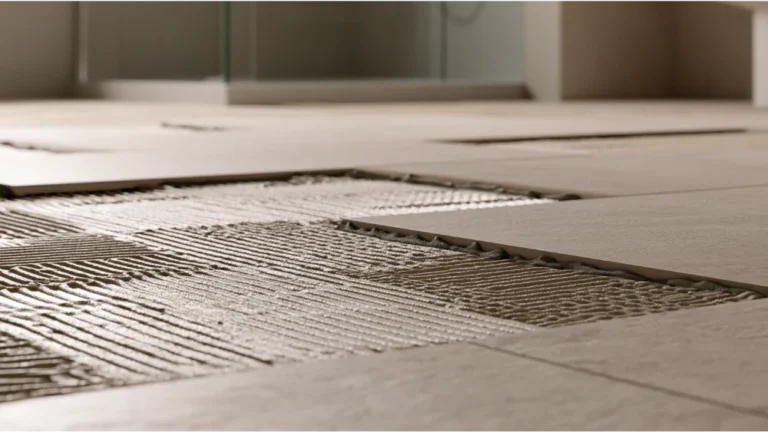
Yes. A surround faces radiant heat and repeated temperature fluctuations, and those cycles can loosen standard setting materials over time. Heat resistant mortar, grout, and heat resistant adhesives are the right call because they’re built to handle that movement in high heat environments. Proper preparation matters just as much: the substrate needs to be flat, sound, and appropriate for the tile you’ve chosen, especially with large format tiles. Always confirm the specific mortar and grout with the tile manufacturer for a fireplace application. Getting the setting materials right is quiet work that shows up years later as a fireplace surround that hasn’t cracked or shifted, and it helps ensure safety when the fire is going.
This is the fun part. A modern fireplace surround should feel intentional and current without chasing a trend that dates in two years. Here are modern fireplace tile ideas we return to again and again:
The strongest surrounds pair a natural texture or warm tone with a clean layout, so the finished piece feels rich but never busy and suits your personal style.
The difference between a fine surround and a forgettable one usually lives in the small decisions. Centering the tile around the firebox opening keeps the composition balanced. Aligning grout lines with the mantel or hearth edges makes the whole assembly read as one deliberate piece. Grout color can either disappear into the tile for a monolithic look or add contrast for graphic detail, and that choice sets the mood. Exposed edges deserve a proper finish rather than a raw cut, and seams in large format tiles should be planned so they land where they’re least noticed. Coordinating the hearth with the vertical surround ties the two zones together. A well-composed surround becomes a stunning centerpiece for the whole living space. This is where each tile expertly laid earns its keep.
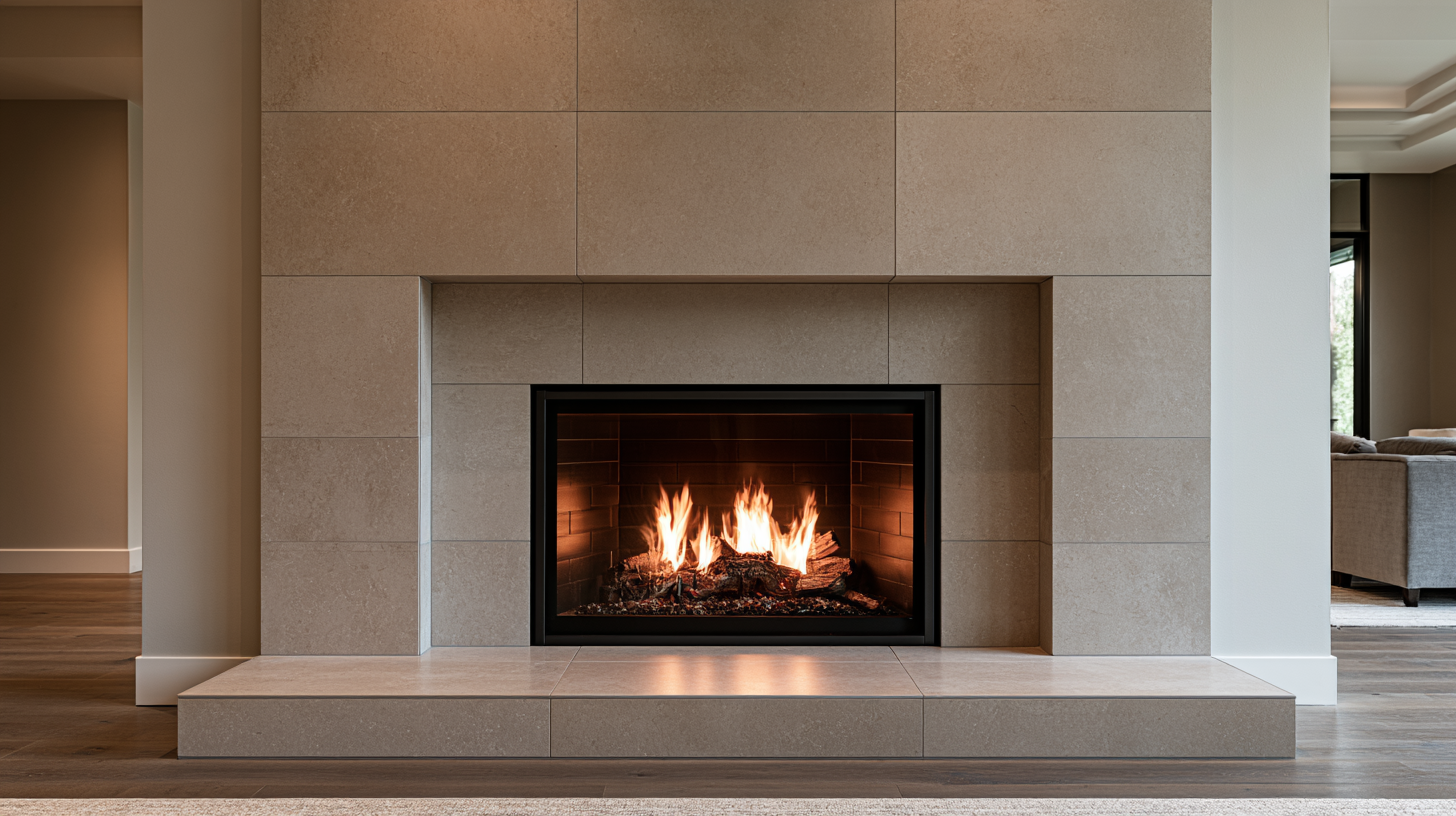
A fireplace surround touches heat, code, and layout all at once, which is why it rewards experience. A skilled installer matches the material to the right heat zone, prepares a flat and sound substrate, and makes clean cuts around a fireplace opening where precision shows. Large format tiles are heavy and unforgiving to handle, so weight and setting technique matter. Layout is planned before anything is bonded, and setting materials rated for high heat are chosen to hold up in high heat areas. At Vasko Tile, we’ve spent 15+ years installing tile across the Greater Sacramento Area, and our craftsman-led team works collaboratively, asking for your input as the project takes shape rather than after. We respect your vision and your budget, and our competitive pricing is about value, not corner-cutting. The goal is a fireplace surround that’s safe, elegant, and built to last.
For Sacramento-area homeowners, a fireplace often anchors the living room even when there’s no fire going, so a refined tiled surround can carry the space year-round. Whether you lean toward porcelain tiles, marble, or patterned cement tiles, the finished fireplace becomes a focal point. If your fireplace burns wood, keep Sacramento County’s Check Before You Burn program in mind, which runs from November through February and restricts wood burning on certain days. And for any change beyond decorative fireplace tile, verify current California code and local permit requirements before you begin, especially since the 2025 California Building Standards Code took effect January 1, 2026.
Porcelain tiles are the most versatile pick for a modern fireplace tile design: dense, heat resistant, and available in large format and stone-look styles. Ceramic tiles and approved natural stone are also strong choices. The best material depends on your look, your fireplace type, and the heat zone being tiled.
Quality ceramic tiles are non-flammable and hold up well on a surround when installed over a suitable substrate with materials made to withstand high temperatures. Cracking usually traces back to a poor substrate or the wrong mortar, not the tile facing normal surround heat.
Marble can work on a fireplace surround, but it’s more porous than porcelain or granite, so it needs sealing and gentle care to resist etching and staining. Because heat resistance and porosity vary between stone tiles, an experienced installer should confirm the specific marble and placement suit the high temperatures involved.
No. The firebox needs code-appropriate firebrick set in refractory mortar, not decorative tile. Standard tile isn’t rated for direct flame and high heat, and it should stay on the surround and hearth zones.
Under the IRC, a masonry hearth extension must reach at least 16 inches in front and 8 inches beyond each side. For openings 6 square feet or larger, that increases to 20 inches in front and 12 inches to each side.
Yes, if the fireplace burns wood. Sacramento County’s Check Before You Burn program applies from November through February and can restrict burning on certain days, so it’s worth reviewing before you use a wood-burning fireplace.
Ready to create a fireplace surround that feels tailored, elegant, and built to last? Contact Vasko Tile to get a quote for your unique project. Call (916) 205-5112 or submit the online quote form for a complimentary consultation, and we’ll help you translate your fireplace tile ideas into a safe, beautifully finished focal point.