Key Takeaway
Bathroom floor tile slip resistance, style, and sizing should be chosen in that order: start with a floor-rated tile carrying a wet DCOF of at least 0.42 or an ANSI A326.3 Interior Wet classification, choose a matte or textured finish, then match the size to the zone. Mosaics 4×4 inches or smaller suit shower floors, while 12×24 tiles work well for main bathroom floors.
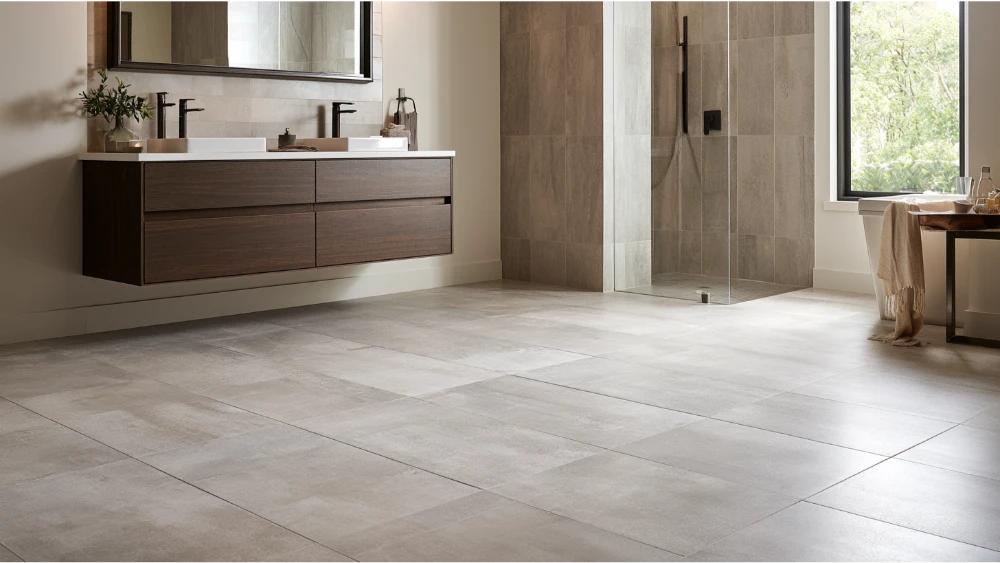
Start with a floor-rated tile that carries an ANSI A326.3 Interior Wet classification or a wet DCOF of at least 0.42, pick a matte or lightly textured finish, then size the tile to the room. Larger tiles create a calm, modern floor, while small mosaic tiles grip better on shower floors. That order matters. For homeowners planning a bathroom remodel, the goal is a floor that looks beautiful on the sample board and feels steady under bare, wet feet. We work through three pillars in the same order every time: slip resistance first, then style, then sizing. Getting bathroom floor tile slip resistance style and sizing right in that sequence is what makes a room both safe and beautiful.
A bathroom floor is a different decision than any other room in the house. It gets walked on with bare, wet feet, splashed daily, and cleaned constantly, and it often needs to work for people of every age. Falls are the leading cause of injury for adults 65 and older. The CDC reports that more than 14 million older adults, about 1 in 4, fall each year, and roughly 37% of those who fall report an injury needing treatment or restricted activity. In bathrooms, most slips happen on a wet surface, so slip resistance is the essential foundation of a floor you can trust, not a scare tactic. Safety is why floor tiles and wall tiles are chosen by different rules, something we’ll come back to. This is why slip resistant floors deserve first consideration before any style choice.
In the U.S., the standard to reference is ANSI A326.3, which sorts hard-surface flooring into five product-use categories: Interior Dry, Interior Wet, Interior Wet Plus, Exterior Wet, and Oils/Greases. For a level bathroom floor that gets walked on wet, ask for an Interior Wet classification, which corresponds to a wet DCOF of 0.42 or higher. That rating is a useful comparison tool, but per TCNA it does not determine whether someone will slip. Footwear, drainage, cleaning, and contaminants all affect the real slip resistance underfoot. The DCOF number is measured under controlled wet conditions and is generally the figure to request from a supplier.
Some imported tiles list European ratings instead. R9 through R13 measure ramp traction, and A/B/C classes apply to wet areas (A for occasionally wet, C for permanently wet like pools). The added friction of a higher rating reduces the risk of falls. Here’s a simple map for matching slip resistant tile to each space:
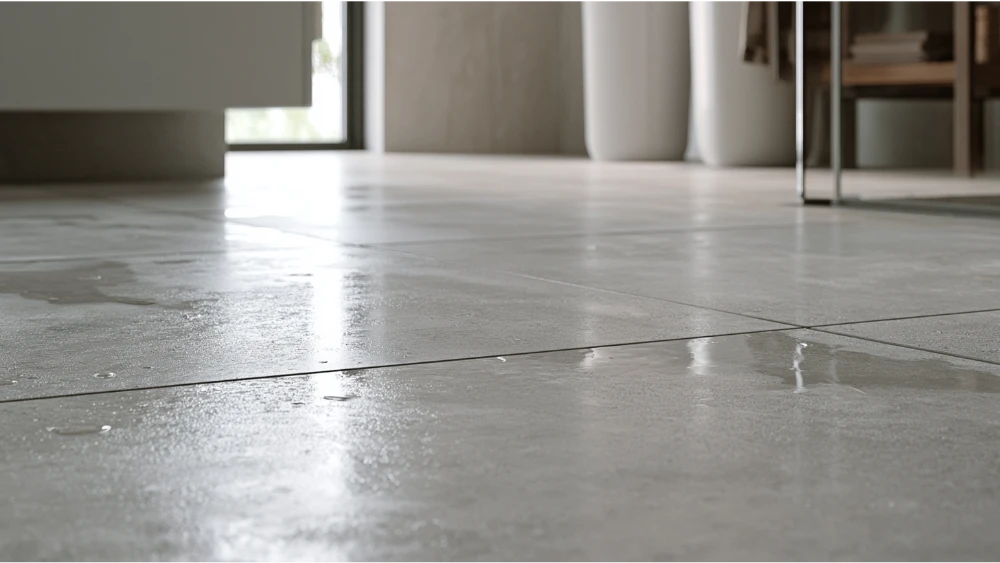
Matte and lightly textured surfaces give reliable grip in a wet room. Polished and glossy finishes look sophisticated, but they lose their slip resistant properties the moment water hits them, so we reserve high gloss for walls where footing isn’t a factor. A matte porcelain tile with a wet DCOF of at least 0.42 gives you steady, slip resistant footing without sacrificing a refined look. Texture does ask for a little more attention during regular cleaning, but the payoff underfoot is worth it. The same logic guides finishes in kitchens, where floors also see spills and standing water, and it carries into commercial environments where sufficient traction protects a steady flow of foot traffic.
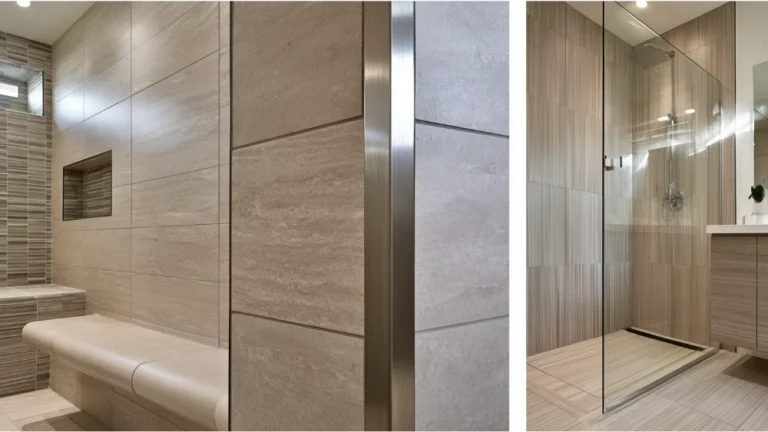
Size should follow function. On a main bathroom floor, medium or large format tiles like 12×12 or 12×24 read clean and create fewer grout lines. On a shower floor, smaller is better: mosaics 4×4 or under follow the slope toward the drain, and the extra grout lines add slip resistance where you need it most. The tighter joints also make small mosaics easier to fit around a curved drain, allowing the tile to flex with the slope. In a 2025 bathroom trends study, 61% of homeowners updating shower flooring chose small tile from 1×1 to 4×4 inches. Large format tiles (any side 15 inches or longer) can look elegant, but they need a flat substrate, within 1/8 inch over 10 feet, and careful layout to avoid lippage on floors and walls alike.
| Zone | Best size |
|---|---|
| Main bathroom floor | 12×12, 12×24, or large format tiles |
| Shower floors | 4×4 or smaller mosaics |
| Walls | 12×24 and larger; skip pieces under 4″ |
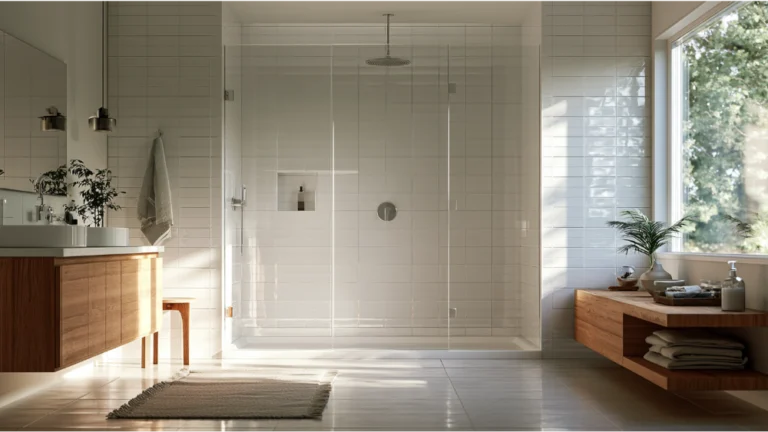
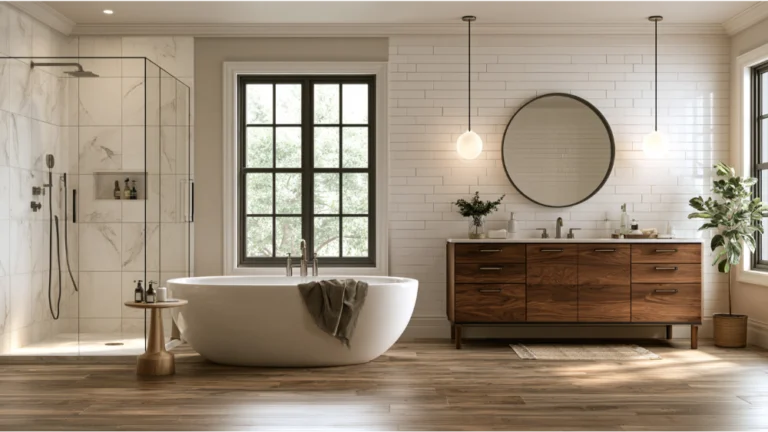
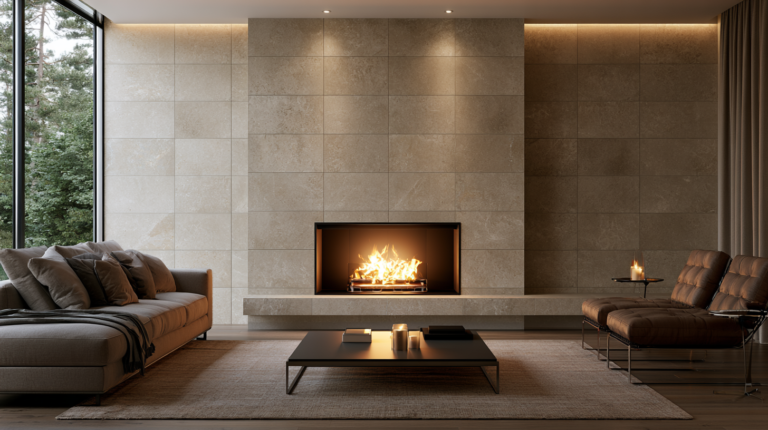
Warm neutrals still lead. NKBA’s 2026 report found 96% of industry respondents naming neutrals as the most popular bath colors, and 80% expect large format flooring to be most popular over the next three years. Stone-look porcelain tiles that mimic natural stone add visual depth, and soft greens and transitional layouts age well without feeling dated. Lighter tiles help a small bathroom feel more open. Balancing aesthetics with functionality is the goal, so coordinate the floor with your vanity, wall tile, lighting, and grout color, and the room settles into the calm retreat you want to step into each morning. These same choices carry through busier spaces like guest bathrooms and family kitchens.
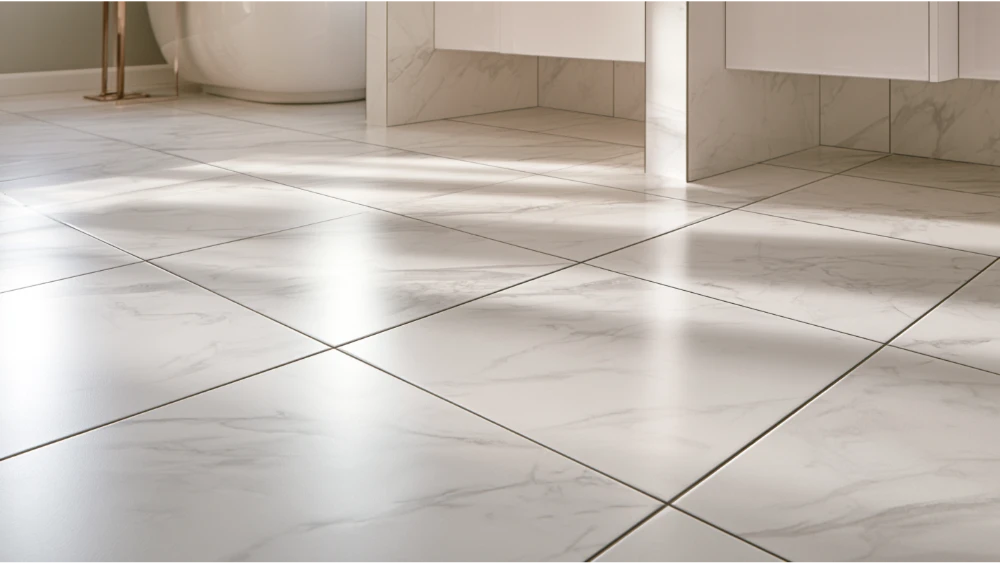
Porcelain is the strong default for bathroom floors. It’s defined as impervious tile with 0.5% or less water absorption under ASTM C373, which matters in a moisture-prone room and adds durability over decades of use. In the 2025 study, 39% of renovating homeowners chose porcelain tiles and 26% chose ceramic for non-shower floors. Ceramic works well when it’s specifically floor-rated and suitable for wet use. Among these materials, natural stone brings real elegance but needs periodic sealing to stay durable. Porcelain is also an ideal choice for stairs, outdoor areas, and patios over a concrete slab, where weather and traffic demand a tough surface. Glass is best kept as a wall or accent material rather than a floor surface.
Grout color shapes both the look and how forgiving the floor is to clean. Grout joint width should be at least three times the tile’s actual facial-dimension variation, so ultra-tight joints aren’t always suitable. It’s important to plan patterns and layout before installation begins. A few missteps we see often:
For homeowners across the Greater Sacramento Area, including Roseville, Citrus Heights, Folsom, El Dorado Hills, Elk Grove, Arden-Arcade, Rancho Cordova, and Carmichael, tile choices are only as good as the installation behind them. With 15+ years of hands-on experience, our team works collaboratively and communicates clearly through every phase, which gives you flexibility to adjust as the project takes shape and matters most if you’ve been let down by a contractor before. Whether the project is a set of bathrooms, a kitchen, or a run of new showers, we match each tile size and finish to how the space is used to ensure lasting results. When a remodel touches plumbing, electrical, structure, a shower pan, or the layout, confirm permit requirements with your local building department first. Ready to start? Get a quote by calling (916) 205-5112 or emailing vaskotileco@gmail.com, and expect a response within 24 hours. We’re glad to answer any request you send our way.